
A Slower, More Sustainable Christmas
Christmas has a way of sneaking up on us. One minute it’s late autumn, the next we’re surrounded by glitter, gift lists, and the quiet pressure to do more, buy more, and be more.
But what if this year, Christmas wasn’t about excess — but about care? Care for the people we love, the food we share, and the planet that holds it all.
A sustainable Christmas isn’t about perfection or restriction. It’s about slowing down, choosing intention over impulse, and remembering that the heart of the season has always been community, warmth, and generosity, not wrapping paper and overfilled bins.
Rethinking “Festive” Food
Food sits at the centre of Christmas, across cultures, homes, and traditions. But festive abundance often turns into unnecessary waste.
A more sustainable approach starts with seasonality:
Build meals around winter produce like squash, carrots, parsnips, leeks, cabbage, and kale.
Use stored fruits such as apples and pears for crumbles, chutneys, or mulled desserts.
Let pulses, grains, and root veg do the heavy lifting rather than relying on out-of-season imports.
Bake goods are always a low-cost, low-waste, happy looking food to prepare, so let’s your creativity go.
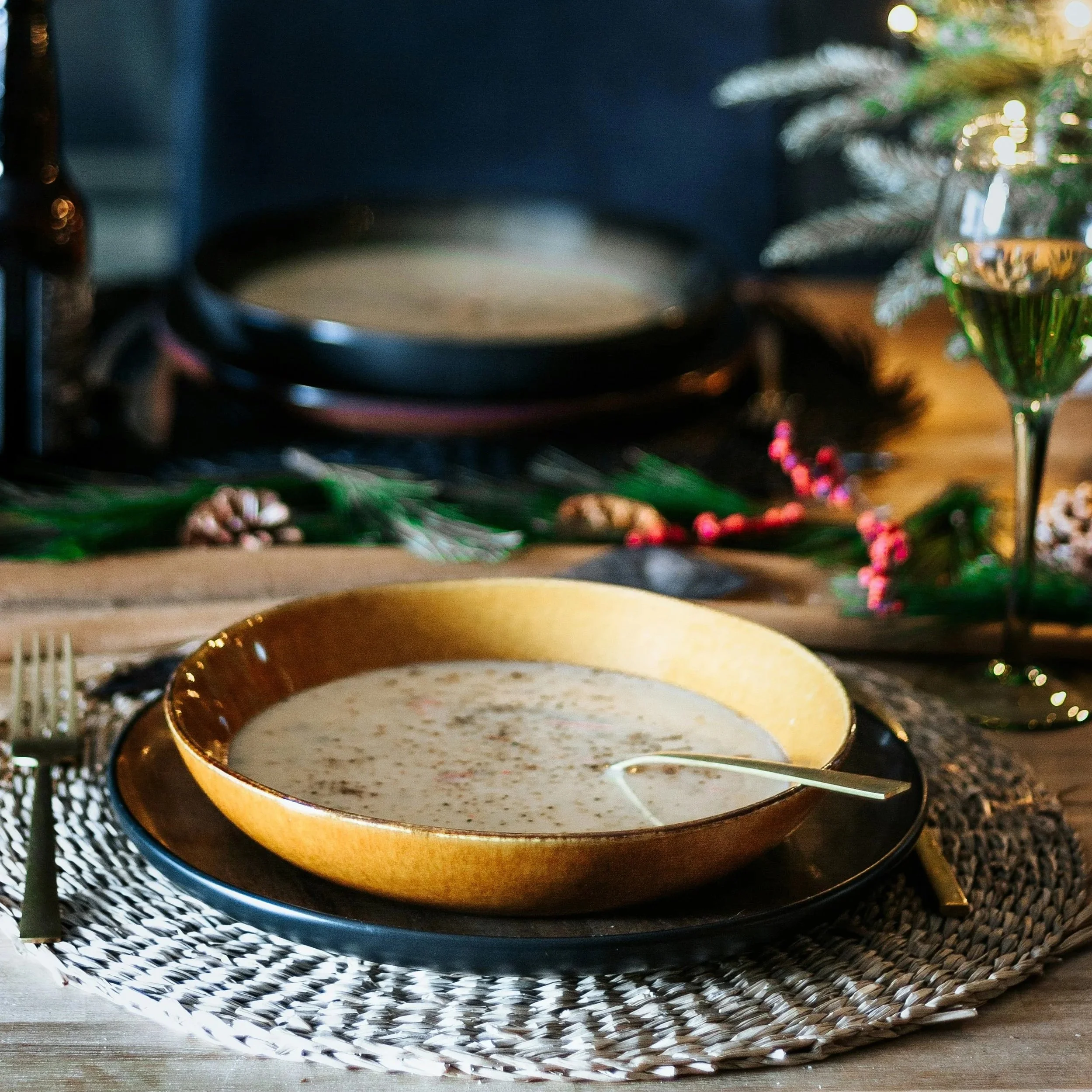
Think slow-cooked stews, trays of roasted vegetables, soups made richer with time rather than excess ingredients. These are dishes that warm both body and home, and often taste better the next day.
Less Waste, More Meaning
Christmas waste is one of the season’s biggest environmental costs — from food to packaging to unwanted gifts.
Small shifts can make a big difference:
Cook realistically, not aspirationally.
Freeze what you won’t use.
Turn vegetable scraps into stock.
Save citrus peels for infusions or cleaning.
When it comes to gifts, sustainability isn’t about spending more — it’s about giving with intention.
Experiences over objects.
Second-hand, vintage, or locally made items.
Homemade food, preserves, or handwritten notes.
Shared time: a meal, a walk, a promise to show up.
A gift doesn’t need to be new to be meaningful. Often, the most cherished ones aren’t.
Wrapping Without the Waste
The joy of unwrapping doesn’t have to come at the planet’s expense.
Instead of single-use paper:
Reuse brown paper, newspaper, or old maps.
Wrap gifts in tea towels, scarves, or fabric (furoshiki-style).
Tie with twine, dried orange slices, or rosemary sprigs.
Save ribbons and gift bags year after year.
It’s not about aesthetics for social media — it’s about creating traditions that last longer than the day itself.

Celebrating Community, Not Consumption
At its core, Christmas is about togetherness. About sharing food, stories, and space.
A sustainable Christmas might look like:
A shared meal where everyone contributes one dish.
Supporting small, independent businesses instead of mass retailers.
Checking in on neighbours or friends who might feel isolated.
Making space for rest in a season that often demands constant activity.
Not every celebration needs to be loud or expensive. Sometimes, the most meaningful moments happen quietly — over a cup of tea, a simple meal, or a long conversation.
Honouring Different Traditions
Christmas looks different in every home and that diversity is something to celebrate.
For some, it’s deeply religious.
For others, it’s cultural, seasonal, or simply a moment of pause at the end of the year.
Sustainability leaves room for all of it.
Food traditions passed down through generations, dishes adapted to local ingredients, rituals that prioritise connection, these are already sustainable by nature.
My souther intalian family Christmas dish is spaghetti with wallnut and anchiovy, a dish that is made almost out of nothing but that taste so good because it has the taste of hundreds of years of family love.
Dishes like this remind us that celebration doesn’t have to be extractive to be joyful.

A Christmas That Gives Back
Choosing a slower, more conscious Christmas isn’t about doing everything “right.” It’s about aligning our celebrations with the values we want to carry into the new year: care, balance, and responsibility.
This season, sustainability can mean:
Eating food that makes sense for the season.
Giving less, but better.
Wasting less — and appreciating more.
Supporting community over convenience.
If Christmas teaches us anything, it’s that warmth doesn’t come from abundance — it comes from intention.
A sustainable Christmas isn’t a checklist. It’s a mindset.
One that says: what we choose matters and how we celebrate can reflect the world we want to live in.
However you mark the season, may it be grounded, generous, and kind to yourself, to others, and to the planet.