
Your Winter Pantry Makeover: Simple Swaps for a Zero-Waste Season

As the days get shorter and the markets fill with root vegetables and cabages, there’s something comforting about a well-stocked pantry. But this year, instead of filling cupboards with plastic-wrapped tins and imported produce, we’re going local, seasonal, and low-waste.
Building a sustainable winter pantry isn’t about deprivation, it’s about rediscovering real flavour, cutting packaging, and supporting local producers who keep our food systems resilient and close to home.
Remember: would you rather give money to be big supermarket company or help the local farmer/marketer?
So here are our thoughts as we enter the end of this year:
Take Stock: What’s Already in Your Cupboard
Before you head to the shops or farmers’ market, start with a mini-audit.
Pull everything out. Group by category (grains, tins, sauces, etc.).
Check expiry dates and make a list of what needs using up first.
Turn older ingredients into a “must-use” meal plan for the week (think soups, stews, or curries).
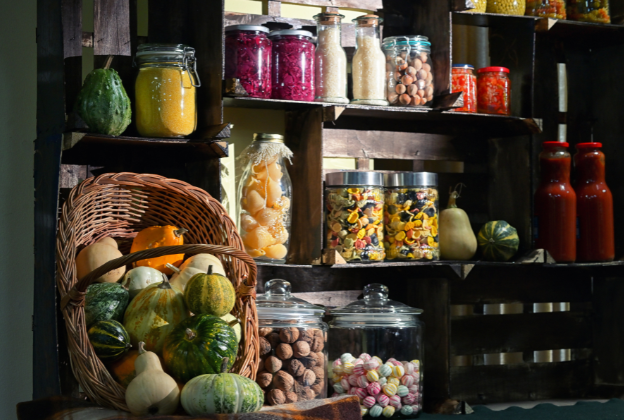
We use a lot of glass jars, not because we are fancy but because it actually help us visualize better what we have, instead od fiscovering mouldy stuff inside forgotten packets.
Shop Seasonally
Winter doesn’t mean bland. Yes, if you have a garden you might think there isn’t much to grow, but in reality there is, and if you search for local grower, they will help plenty.
A little note: please let’s try not to buy fruits and vegetables that are really not in season and come from either greenhouses that forces fruits to grow, or comes from miles away! You really don’t need to eat strawberry and tomatoes all the time!
This is good season to eat:
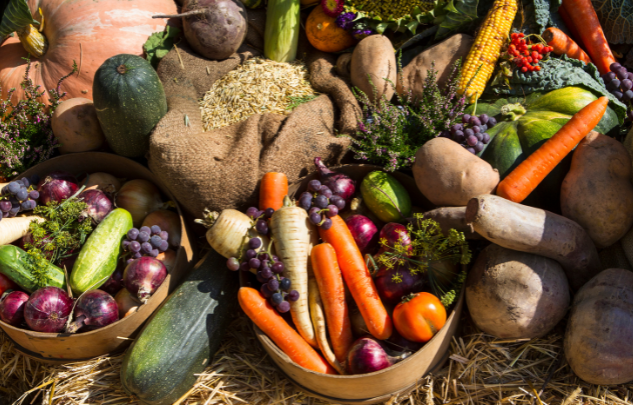
Root vegetables: parsnips, carrots, turnips, beetroot, onion, potatoes
Greens: kale, cabbage, leeks
Local fruits: apples, pears, squash
It is still very much squash or potatoes soup seasons, for example. Soups can be the cheapest, healthies and more comforting recipes to prepare and eat, so maybe give a try?
Support Your Local Food Ecosystem
Every pound spent locally strengthens community resilience. Many independent grocers, refill stores, and co-ops source directly from UK growers, cutting out unnecessary transport and waste.
If you’re feeling inspired, consider joining a communal pantry, a local food accociation or get to know your local farmer market.
These connections turn a simple shopping trip into a movement for better food systems.
Focus on Refillables and Reusables
Swap single-use packaging for bulk or refill options wherever possible.
Glass jars or stainless tins for dry goods, especially for grains.
Old bottles for oils or vinegars (you don’t even need to buy them, they come alreayd with the product inside and you can keep them forever for refilling!)
Fabric bags for grains, nuts, or dried fruit. I bought one containing wallnut last year and I am reusing it to store bread. They absorb humidity and keep things fresh from mold.
If you can’t find refills, go for large-format items (a big bag of oats or lentils) to cut down on packaging per portion. Buying 10 kilos of rice in a big bag usually cost much less than buy 10 packs of 1 kilo.
Batch, Preserve, and Make It Last
A sustainable pantry is about preserving abundance.
This is the perfect time for pickles, or homemade stock (you can freeze stock in a ice cube tray to use after), jams or infused oil.
Preserved foods not only save waste but also reduce impulse takeaways when you’re too tired to cook.